Midjourney, the widely popular AI image generation tool, has just released its long-anticipated V7 model, marking the platform’s first major update in nearly a year.
As the alpha version rolls out to users, it brings a host of new features, architectural upgrades, and a wave of mixed reactions from the AI art community. Here’s a comprehensive look at what’s new, what’s changed, and how creators are responding.
Revamped Model Architecture and Image Quality
V7 is built on a completely redesigned system, with updated datasets and a focus on photorealism and detail precision. The model generates images that are not only more realistic but also display improved textures, lighting, and nuanced human expressions.
This helps reduce the “uncanny valley” effect that sometimes plagued earlier versions, especially when rendering people, architecture, or natural landscapes. Users are reporting more natural skin, fabric, and lighting details, with less stiffness in human poses.
Enhanced Prompt Understanding
One of V7’s standout advancements is its improved ability to interpret and act on complex text prompts. The model now more accurately translates user instructions into visual outputs, reducing the need for endless prompt tweaking and enabling users to achieve their desired results faster. This smarter prompt processing is especially noticeable in the way V7 handles intricate details in bodies, hands, and objects, areas where previous AI models often struggled.
Visual Test: Midjourney V6.1 vs V7 with a Simple Prompt
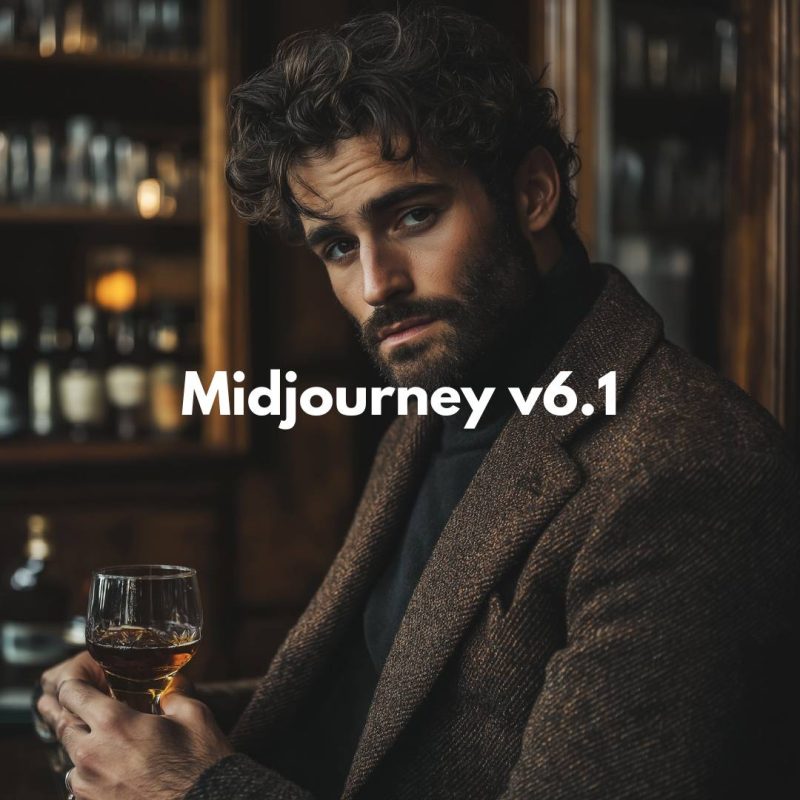
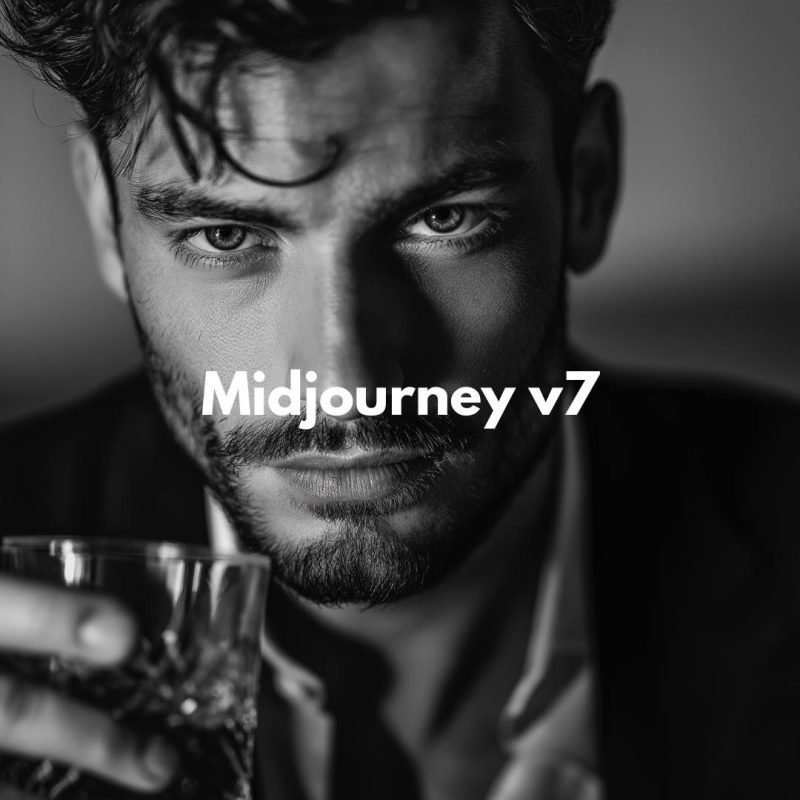
To get a clearer idea of how Midjourney V7 handles visual prompts, I ran a simple test using the same prompt on both versions: “Italian male model, photoshoot for whiskey brand.”
The most noticeable difference was in the way each version interpreted the glass. In the V6.1 image, the model was often holding what looked more like a beer glass or something oddly shaped—something you wouldn’t usually associate with a whiskey brand. V7, on the other hand, got it right. The model held a proper whiskey tumbler, the kind you’d expect to see in a real advert.
It might seem like a small detail, but it says a lot about how V7 has improved at understanding the unsaid—the little things users expect without having to spell them out. That kind of improvement in visual reasoning makes a big difference, especially for people working on ads, brand visuals, or any image that relies on subtle context.
Personalization by Default
For the first time, Midjourney has enabled personalization as a default feature. Upon first use, users are guided through a brief setup—typically rating around 200 images—to train the model to their aesthetic preferences. This allows V7 to generate images more closely aligned with individual tastes, and the feature can be toggled on or off at any time. This shift aims to make the creative process more intuitive and tailored for each user.
Draft Mode and Voice Prompting
A headline feature of V7 is “Draft Mode,” which produces images at ten times the speed and half the cost of standard generations. While these images are rougher and less detailed, Draft Mode is ideal for rapid iteration, brainstorming, and collaborative sessions. Notably, Draft Mode also introduces voice prompting—users can speak their ideas directly into the web interface, and the model will interpret and generate images accordingly. This conversational approach streamlines the workflow, making creative exploration more accessible and interactive.
Improved Workflow and Compatibility
V7 maintains compatibility with V6.1’s sref (style reference) codes, allowing users to leverage existing style presets without rebuilding them. Common parameters such as aspect ratio, random seed, and stylization are still supported, ensuring a smooth transition for long-time users. The model also promises better multilingual support, making it more accessible to a global user base.
Community Reaction: A Divided Response
Many in the AI art community are enthusiastic about the new features, especially the leap in image realism, speed, and the personalization system. Artists and designers appreciate the improved coherence in details, more accurate prompt handling, and the ability to iterate rapidly using Draft Mode. The addition of voice prompting and the promise of video capabilities have also been met with curiosity and optimism.
Criticism and Concerns
However, the reaction is far from universally positive. Some users express disappointment, feeling that the improvements are incremental rather than revolutionary. Issues such as inconsistent hand rendering, prompt adherence, and text generation persist for some, leading to frustration—especially among power users who expected a more dramatic leap after a year of development. There are reports of seeds behaving differently, moodboards being clunky, and some older features (like image attachment) not working as smoothly as before.
A segment of the community notes that, while V7 is faster and more powerful, it can also feel more random and less predictable in certain workflows. Comparisons with competitors like OpenAI’s Sora and other generative models highlight areas where users feel Midjourney is no longer the undisputed leader.
A Work in Progress
It’s important to note that V7 is still in alpha, with the Midjourney team promising frequent updates—every week or two over the coming months—to address bugs, add missing features, and refine performance. The company is actively soliciting feedback, encouraging users to experiment and help shape the model’s evolution.
Conclusion: A Pivotal Moment for AI Art
Midjourney V7 represents both a technological leap and a transitional moment for the platform. With its new architecture, smarter prompt handling, and personalization, V7 is poised to expand what’s possible in AI-powered creativity. Yet, as the community’s mixed reaction shows, expectations are high and the bar for innovation keeps rising.
For creators, V7 offers powerful new tools and a glimpse into the future of generative art. As the model matures and user feedback shapes its development, Midjourney’s place at the forefront of AI image generation will depend on how quickly and effectively it can address current shortcomings and continue to push creative boundaries.
Whether you’re an artist, designer, or AI enthusiast, now is an exciting time to explore what Midjourney V7 can offer—and to help shape its next chapter.